We can use grid tiles to test for stability. Strips of vinyl tape have been cut and carefully adhered to the tile to cover about three quarter of the fired glaze in each square cell. The tile was then soaked in vinegar for 3 days.
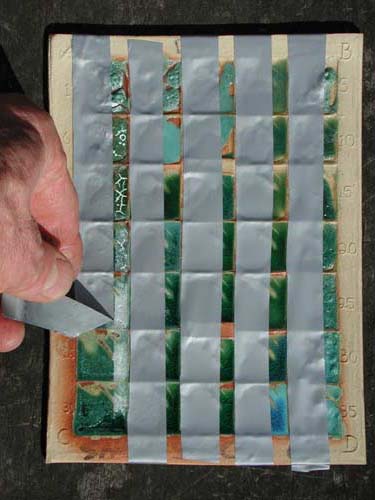
Copper Grid Tile, Peeling Tape
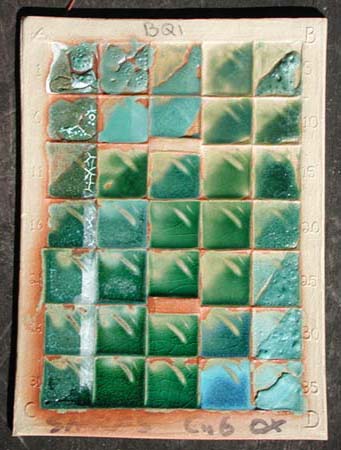
Copper Grid Tile, No Tape
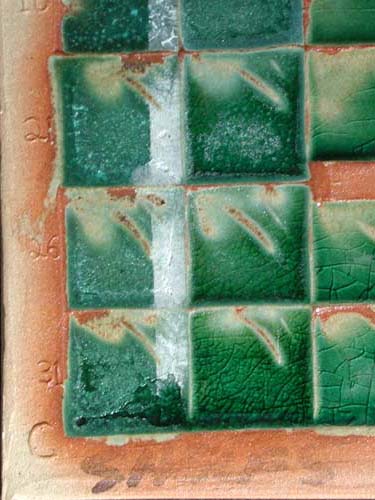
Copper Grid, Tile A, Corner No Tape
This test is outlined in "Mastering Cone 6 Glazes" by Ron Roy and John Hesselberth. The tape is then removed (see Image 1) and thoroughly dried out. If any difference is visible between the taped over and exposed areas within a cell, this is an indication the glaze is not stable in acid. (See Images 2 and 3. Click on the images for a larger and magnified photo.) Be aware however that a lack of any visible difference does NOT guarantee stability.
Corner A - Top left are high alumina glazes.
Corner B - Top right glazes are high in both alumnina and silica, which means low in flux.
Corner C - Bottom left are high flux glazes.
Corner D - Bottom right are high silica glazes.
It is obvious from the grid that the low silica glazes (along the left hand side) are quite unstable in the acid.